
For brands, co-packers, and packaging distributors looking to scale production, deciding between roll labels vs sheet labels is a critical supply chain decision
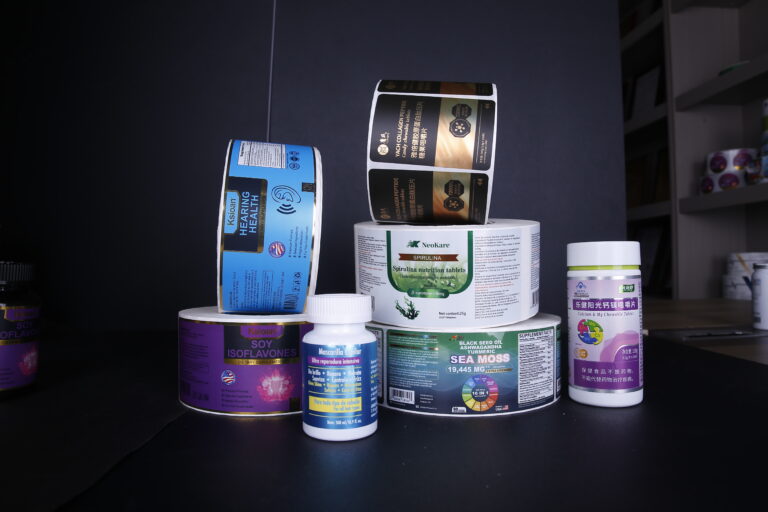
If you are a growing e-commerce brand, a co-packer, or a regional packaging distributor, you already know that scaling production is a massive headache. In the early days, hand-applying brand stickers to a few dozen bottles a week was fine. But as your order volumes climb into the thousands, manual application becomes a massive bottleneck that drains your labor budget.
When scaling up, you will face a critical supply chain decision: Should you source roll labels vs sheet labels? Choosing the wrong format isn’t just a minor design mistake; it can completely derail your manufacturing line or waste thousands of dollars in un-useable bulk inventory. This real-world B2B guide breaks down the operational differences, cost structures, and technical pitfalls to help you source like a seasoned industry professional.
Before looking at the technical data, there is one universal truth every purchasing manager must memorize: Sheet labels are for people; roll labels are for machines.
| Operational Feature | Sheet Labels | Roll Labels |
| Best Application Method | 100% Manual Hand Application | Automatic Labeling Machine or Dispenser |
| Ideal Order Volume | Small runs (100 – 1,000 pcs) | High volume / Bulk (5,000 – 1,000,000+ pcs) |
| Storage & Shipping | Flat sheets, takes up more surface space | Compact continuous rolls, easy to stack |
| Cost Per Label | Higher per-unit cost on mass runs | Extremely low per-unit cost in bulk |
| Best Used For | Prototyping, small batch testing, boutique items | Fast-paced manufacturing, beverages, cosmetics |
Let’s talk logistics. If your brand or your factory client utilizes an automatic labeling machine, sheet labels are completely out of the question. You need labels spun onto a continuous liner around a cardboard core.Driving Down the Total Cost of Ownership (TCO)
While sheet labels look cheaper for a tiny test batch of 200 stickers, their price skyrocketing once you hit commercial volumes. With bulk label printing, manufacturers utilize massive high-speed rotary presses. The setup cost is higher, but the cost-per-label drops drastically.
More importantly, it saves your packing staff from literal hand cramps and hours of wasted time, allowing you to reallocate labor to scaling sales.
![H2: Why Automated Production Lines Demand Custom Roll Labels Let's talk logistics. If your brand or your factory client utilizes an automatic labeling machine, sheet labels are completely out of the question. You need labels spun onto a continuous liner around a cardboard core. H3: Driving Down the Total Cost of Ownership (TCO) While sheet labels look cheaper for a tiny test batch of 200 stickers, their price skyrocketing once you hit commercial volumes. With bulk label printing, manufacturers utilize massive high-speed rotary presses. The setup cost is higher, but the cost-per-label drops drastically. More importantly, it saves your packing staff from literal hand cramps and hours of wasted time, allowing you to reallocate labor to scaling sales. 📸 [INSERT IMAGE 1 HERE] Image Suggestion: A high-quality photo from the previous screen showing industrial rolls of labels next to labeled bottles, proving production scale. Alt Text to Fill in WordPress: Industrial bulk label printing rolls for automatic labeling machine](https://oneprintpack.com/wp-content/uploads/2026/05/Gemini_Generated_Image_9xdug79xdug79xdu-1024x696.png)
Here is where many start-up brands get burned. They order 50,000 roll stickers, wait weeks for international freight, and then realize the rolls won’t fit into their labeling machinery.
To ensure a seamless factory application, you must specify these two technical settings to your label manufacturer:
The cardboard cylinder at the center of the roll is the “Core.” Standard industrial labeling equipment usually requires a 3-inch core. Smaller benchtop applicators or mobile thermal printers often use a 1-inch core. If you order a 1-inch core for a machine built for 3 inches, the roll won’t even slide onto the machine spindle.
This is the direction your label faces as it unrolls off the spool. There are 4 standard industrial directions:
Top First: The top of the artwork comes off the roll first.
Bottom First: The bottom of the design leads the way.
Right First: The right side of the graphic peels off first.
Left First: The left side leads.
⚠️ CRITICAL B2B NOTE: If your automated machine applies labels to a wine bottle from the left side, but your roll was wound “Right First,” your labels will be applied upside down on thousands of products! Always ask your co-packer for their machine’s specific chart before finalizing production.
To understand the global standardized tolerances for machinery compatibility, you can reference the official FINAT Labelling Federation guidelines for international self-adhesive labeling standards.

At Oneprint, we don’t just print stickers; we protect your production line. We specialize in contract manufacturing for international brands and packaging distributors who cannot afford a single millimeter of error.
Whether you need heavy-duty water-resistant BOPP rolls for cosmetics or textured paper labels for craft beer, we double-check your core sizes and unwind directions before the plates ever hit our presses.
Ready to automate your packaging workflow and slash your per-unit costs? Explore our full line of industrial custom roll labels or send your artwork over to our engineering team today to get a certified production blueprint!

Leading custom packaging and printing solution supplier in China for all of your needs.
Please leave your contact info, we will reply within 1 hour!