Material selection:
Surface materials: commonly used coated paper, mirror coated paper, synthetic paper, PET, PVC/special paper, etc. Coated paper has good printability and high color reproduction; mirror coated paper has smooth surface and mirror effect, which can improve the grade of labels; synthetic paper is resistant to water, oil and chemical corrosion;PET and PVC materials have good toughness and transparency. Glue: Choose the right glue according to the material, shape and use environment of the surface material and labeling object. Common hot melt adhesives, hydrosol, solvent adhesive, etc. Bottom paper: generally used in the Glassin paper, kraft paper, etc., mainly to support and protect the role of stickers, easy to process and label.
Printing process description:
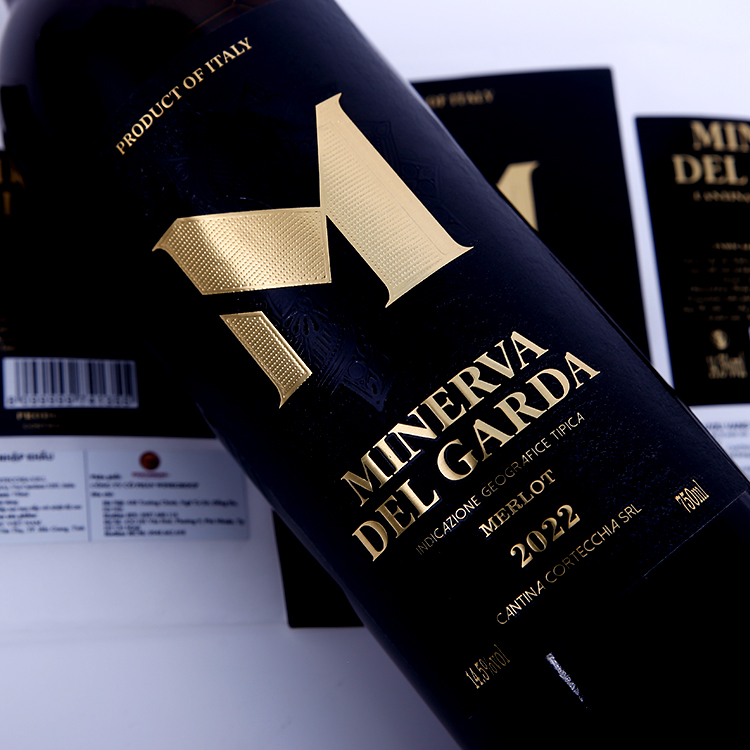
bump technology Principle: Through the mold under the pressure of a specific area of the label surface extrusion raised patterns or text, so that the label presents a sense of three-dimensional and layered. Features: It can highlight key information or patterns on the label, enhance the visual impact and touch of the label, and enhance the quality and artistic value of the label. Application example: often used for wine brand logo, name and other important elements, such as Maotai brand logo using percussion technology, making it more eye-catching and three-dimensional.
stamping process Principle:
Using the principle of hot press transfer, the metal layer on the hot foil is transferred to the label surface to form gold or other color patterns or text. Features: After stamping, the label has a shiny metallic luster, which can enhance the grade and gorgeous feeling of the label and increase the attractiveness of the product. Application example: Widely used in high-end liquor labels, such as some product labels of Wuliangye, highlighting brand names and decorative patterns through bronzing technology, showing noble quality.
embossed process Principle: Using special plate making and printing technology, the label surface simulates a three-dimensional effect like embossed, so that the pattern or text seems to protrude from the label, with a strong sense of three-dimensional and realistic.
Features: The embossed process can create unique visual effects, making the label more vivid and artistic, giving people a high-end, refined feeling. Application example: some high-end wine, whisky and other wine labels will adopt embossed technology to show the historical culture of the brand or the unique quality of the product, such as the label of Lafite wine, which shows the landmark building of the winery through embossed technology and creates a strong historical atmosphere.

Leading custom packaging and printing solution supplier in China for all of your needs.