
If you are sourcing automatic roll labels for a labeling machine, artwork is only part of the job.
Sometimes it is not even the part that causes the trouble.
The label can look great on screen. The colors are approved. The finish looks right. The size matches the bottle. Everyone feels done.
Then the rolls reach the line.
That is where the real questions start. Does the core fit the spindle? Is the rewind direction correct? Will the sensor catch the gap cleanly? Can the label peel fast enough without drifting, wrinkling, or stopping the applicator every few minutes?
A lot of label problems do not begin at print quality. They begin much earlier, when the buyer sends over artwork, quantity, and a deadline, but not the machine specs that actually decide whether the roll will run.
This happens all the time with machine-applied labels and custom label projects that are quoted before the line requirements are fully confirmed.
Automatic roll labels have to match the applicator, the container, and the line speed, not just the artwork.
A supplier may be perfectly capable of printing beautiful rolls and still never ask about rewind direction. Or core size. Or outer diameter. Or whether the label is being applied to a cold PET bottle, a curved glass jar, or a squeezable HDPE container.
That is usually where the avoidable costs begin.
If you are sourcing roll labels for a co-packer, bottling line, or high-volume packaging run, this is the part worth slowing down for.
Not for long.
Just long enough to avoid a much more expensive conversation later.
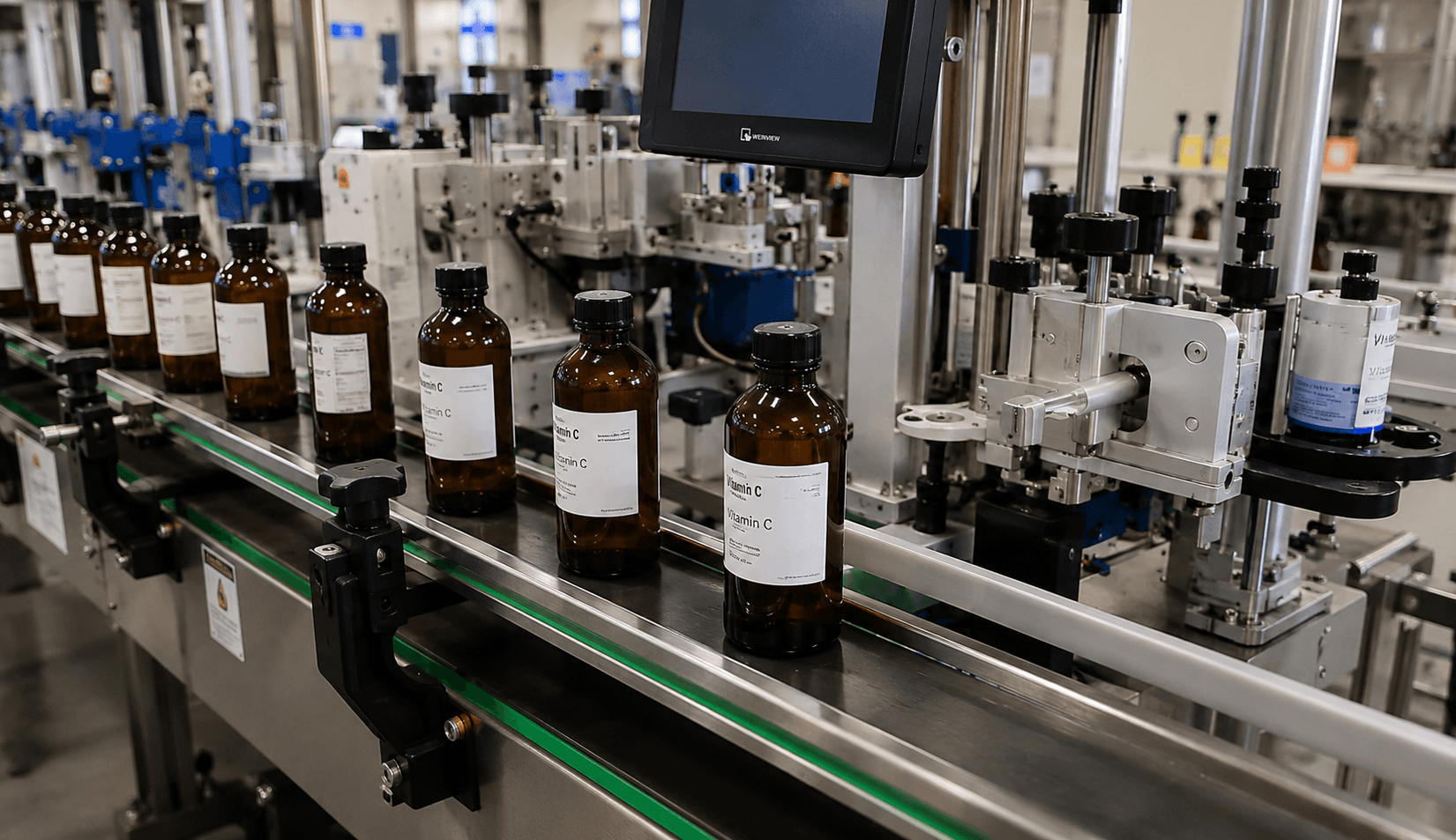
Why automatic roll labels are different on production lines
Hand-applied labels are forgiving. A person can rotate the bottle a little, pull the label from a slightly awkward angle, and keep moving.
Automatic labeling equipment does not work like that.
Machines expect consistency. The roll has to feed the correct way. The gap needs to be readable by the sensor. The liner has to track properly. The label has to release at the right point, at the right speed, onto the right surface.
If one detail is wrong, the line may still run, but not well. You start seeing small failures. Crooked placement. Missed labels. Wrinkles. Stops. More frequent roll changes. Operators making temporary fixes that no one wanted to need in the first place.
This is why machine applied labels should never be quoted like ordinary stickers.
There is a big difference between:
We need 50,000 labels, 60 x 90 mm, gloss.
and
We need 50,000 BOPP roll labels for automatic application on 250 ml PET bottles, 3 inch core, maximum 8 inch OD, outside wound, 3 mm gap, cold-fill product, refrigerated storage.
The second request gives the supplier something real to work with.
That is the difference between asking for stickers and preparing a real self-adhesive label printing job for production.
The first one mostly gives them room to make assumptions.
Rewind direction is a tiny detail until it ruins the run
Rewind direction sounds like a minor technical note.
It is not.
It tells the supplier how the labels should be oriented as they come off the roll. If it is wrong, the machine may feed the label upside down, backwards, or with the wrong edge leading.
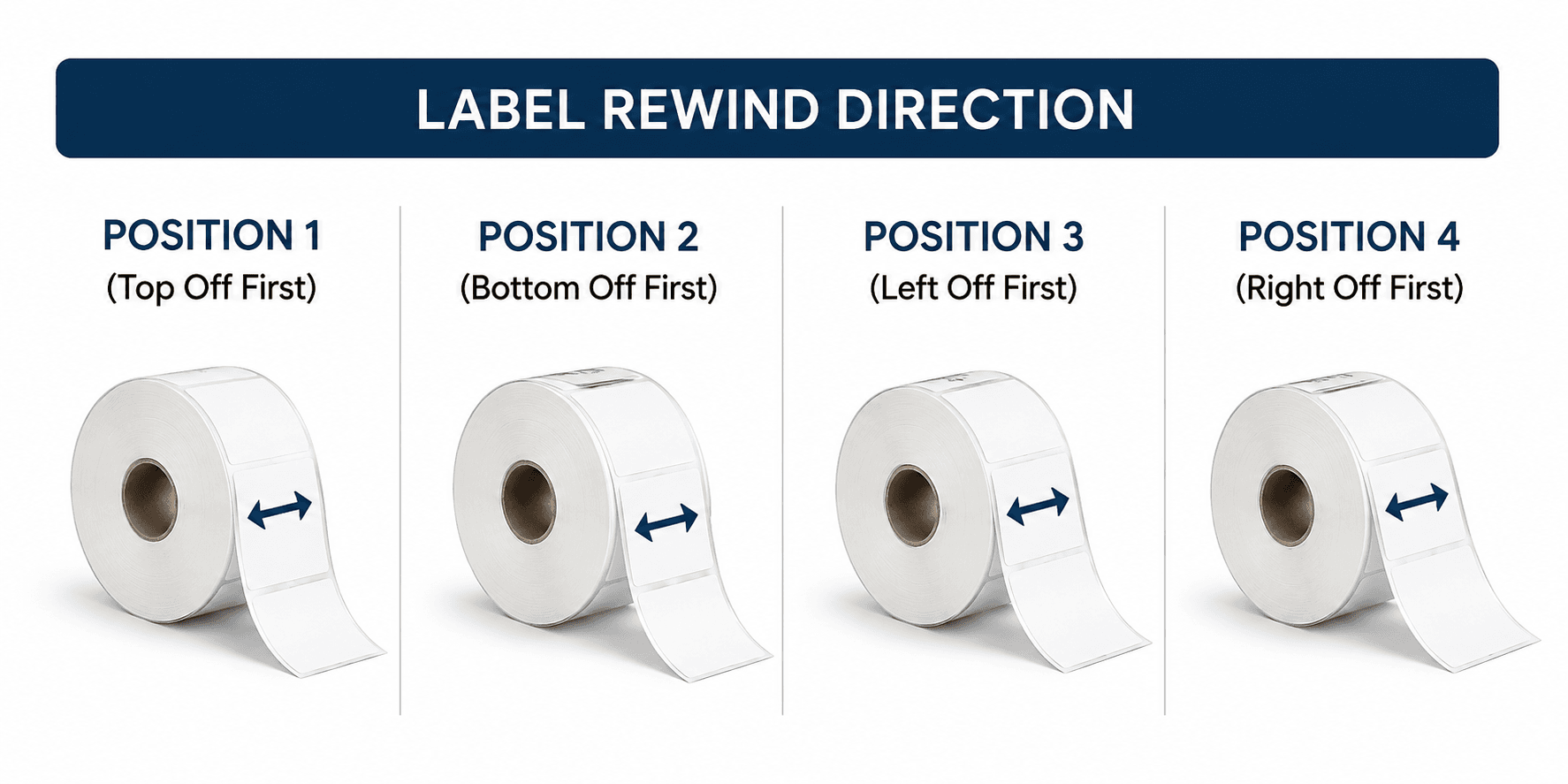
That kind of mistake feels silly when you explain it afterward.
It does not feel silly when the production team is standing there with a roll that cannot be used as planned.
Many first-time buyers guess rewind direction from a diagram they half understand. Others assume the printer will know. Some trust that the last job’s setup will somehow apply to the new applicator.
That is where people get burned.
If a co-packer or line operator is applying the labels, ask them directly which rewind position they require. If possible, get a sample roll or a machine spec sheet. Even a quick phone photo of the applicator setup can help prevent the wrong order from being produced.
Nobody enjoys discovering rewind direction in the middle of a packaging run.
Core size and outer diameter decide whether the roll fits
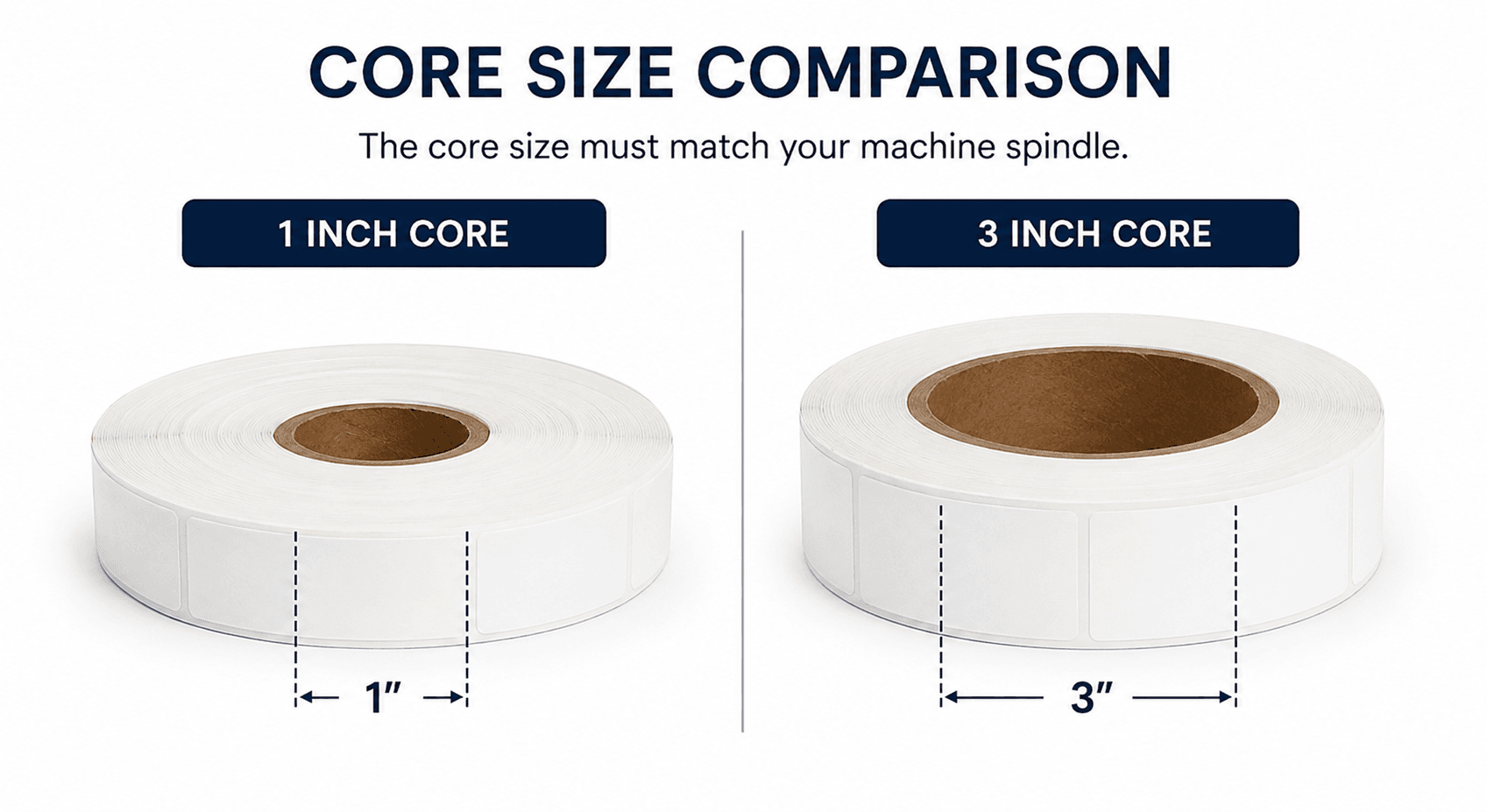
The core is the tube inside the roll. It has to fit the machine spindle.
The outer diameter decides whether the full roll physically fits the applicator and how often the operator needs to change rolls.
These are basic numbers, but they matter more than people think.
A 3 inch core is common for many production environments. A 1 inch core may be common on smaller equipment. But common is not the same as correct. The right answer comes from the actual machine.
Outer diameter matters for the same reason. A large roll may reduce changeovers, which is great for throughput. But if the OD is too large for the applicator space, that advantage disappears immediately.
This is one of those packaging details buyers often leave until too late. They approve the label face size, but no one has fully confirmed the roll construction.
From the printer’s side, the order may still look complete.
From the production side, it is not.
When requesting a quote, always include:
- Core inside diameter
- Maximum outer diameter
- Preferred labels per roll, if you have one
If you do not know the numbers, send the machine model. A serious supplier should be able to tell you what still needs to be confirmed.
For automatic roll labels, core size and maximum OD are production specs, not optional details.
Label size, gap, and liner width affect dispensing
Buyers usually focus on the finished label size. That part is obvious.
What gets overlooked is the roll build around it.
Automatic applicators rely on the gap between labels so sensors can detect each label correctly. If the gap is too tight, inconsistent, or mismatched with the line setup, you can get feed problems, false reads, or drifting placement.
Liner width matters too. The roll needs to track cleanly through the machine. Too narrow and it may wander. Too wide and it may not fit equipment tolerances.
This is one reason a label can be technically well printed and still perform poorly on the line.
The print is fine.
The roll spec is not.
If your labels are being machine applied, do not stop at face size. Confirm the full roll construction.
Industry groups such as FINAT have long pushed for clearer technical specifications between buyers and suppliers for exactly this reason.
If the finished label also includes a scannable barcode, barcode placement and print contrast guidelines should be checked separately instead of being treated as a last-minute artwork issue.
Material and adhesive should match the actual package, not the sample photo
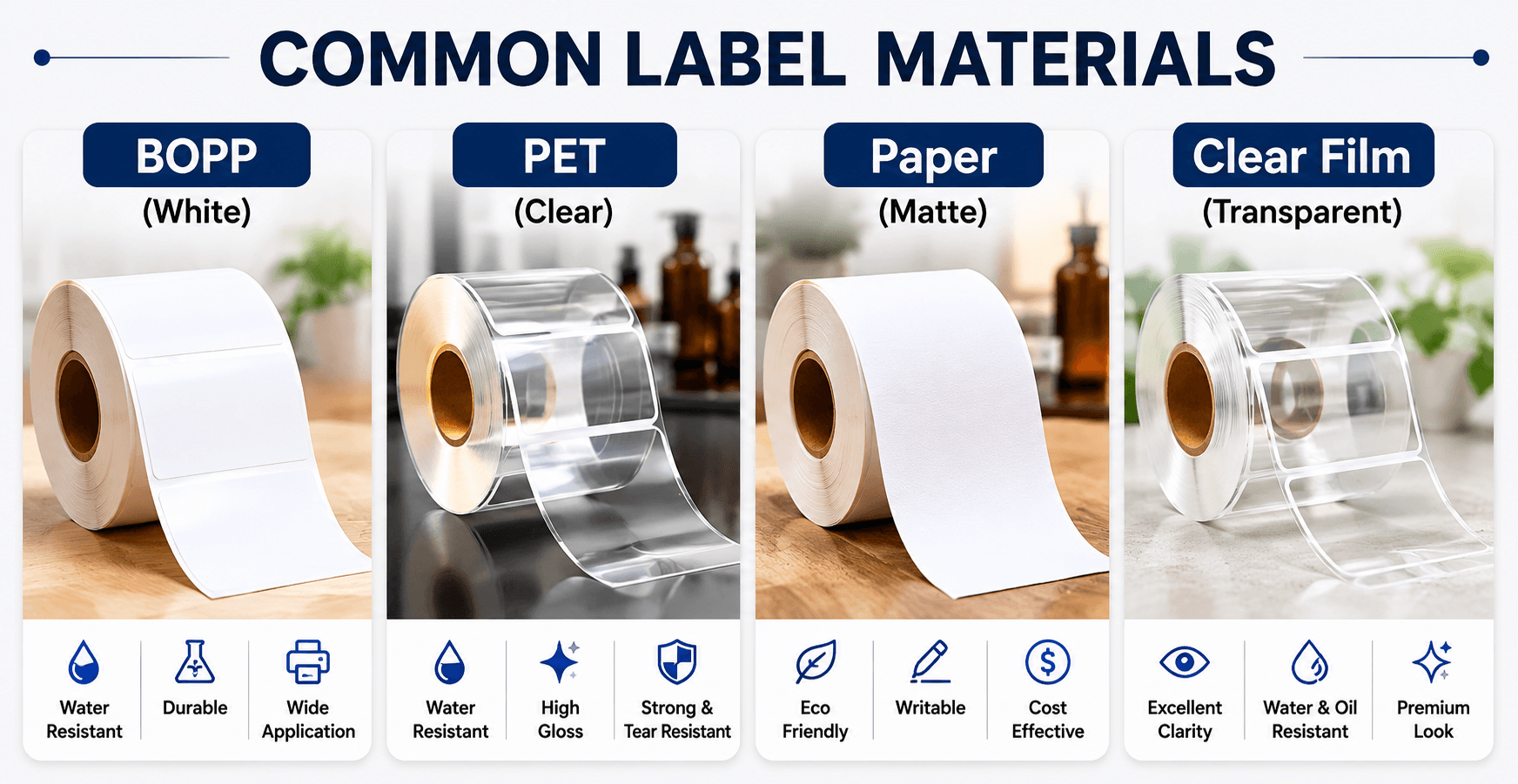
Material selection is where many roll label quotes start to look similar on paper and very different in production.
A glossy paper label may look great in a PDF approval. That does not mean it is the right choice for a refrigerated bottle, an oily supplement jar, a pouch with surface tension issues, or a squeezable personal care container.
The package environment matters.
So does the surface.
So does the filling condition.
Before finalizing material and adhesive, confirm:
- What the container is made of
- Whether the surface is flat, curved, tapered, or squeezable
- Whether the product is filled hot, cold, or at room temperature
- Whether the label will face moisture, oil, friction, refrigeration, or condensation
- Whether the label needs permanent adhesion or clean removability
This is also where cheap quotes can become expensive ones.
Not because the press ran badly.
Because the label was never specified for the real use case.
A clear BOPP label may be right for one bottle and a bad choice for another. A paper stock may be perfect for dry cartons and completely wrong for cold-chain packaging. The right supplier should be talking about the package and the environment, not only the artwork.
If you are comparing face stocks and performance options, our guide to durable packaging labels is a useful next step before requesting samples.
Finishes and shapes can create machine issues too
Foil, matte lamination, gloss varnish, soft-touch finishes, unusual die-cuts, sharp corners, and small-format labels can all affect runnability.
That does not mean you should avoid premium finishes.
It means they should be treated as production variables, not only design decisions.
A label that looks premium on a mockup still has to peel cleanly from the liner and apply at speed. That matters even more if the line is fast, the container is curved, or the label shape is narrow and delicate.
This is especially relevant for cosmetics, supplements, and beverage labels where branding teams often push for a more elevated look.
Nothing wrong with that.
Just make sure the machine gets a vote too.
Questions to ask your co-packer before placing the order
If a co-packer is applying the labels, ask them for specs before you approve production.
These are the useful questions:
- What core size do you require?
- What rewind direction do you need?
- What is the maximum roll outer diameter?
- Do you require a specific gap between labels?
- Do you prefer a certain liner type?
- How many labels per roll work best for your line?
- Are there known issues with clear labels, tapered bottles, or squeezable containers?
- Can you share a sample roll from a job that already runs well?
This sounds basic because it is basic.
But basic details are exactly where projects go sideways.
A lot of teams spend days reviewing color, finish, and artwork alignment, then forget to ask the person who actually runs the applicator what the machine needs. The operator ends up seeing the problem last and inheriting a decision they never got to influence.
That is not a great system.
Common mistakes buyers make with automatic roll labels
The most common mistake is treating roll labels like ordinary stickers.
They are not. Not in a machine-applied environment.
Other common mistakes include:
- Ordering by label size only
- Guessing rewind direction
- Forgetting to confirm maximum OD
- Choosing material based on appearance alone
- Not mentioning that the labels will be machine applied
- Ignoring co-packer specs until the rolls arrive
- Approving a premium finish without checking dispensing behavior
- Skipping a test roll when the container or applicator is new
None of these look dramatic in an email thread.
On a production line, they can be very dramatic.
When a test roll is worth it
A test roll is worth requesting whenever one important variable is new.
New container. New adhesive. New finish. New shape. New co-packer. New applicator. New storage condition.
Especially if the product is going into cold storage, high humidity, oil exposure, or high-speed application.
A test roll will not eliminate every risk. But it gives you a chance to catch the expensive ones early. Feed direction. Sensor read. Peeling. Alignment. Adhesion. Finish behavior.
For larger runs, this is usually a smart cost, not an unnecessary one.
What suppliers should ask before quoting automatic roll labels
A good roll label supplier should ask more than quantity and size.
They should want to know how the label will be applied, what surface it is going onto, what conditions it will face, and what the machine requires.
If the supplier never asks about rewind direction, core size, roll OD, container material, or application conditions, pause there.
Maybe the job really is simple.
But maybe the supplier is quoting a printed roll, while you actually need a production-ready roll label setup.
Those are not always the same thing.
For automatic labeling machines, the best label is not just the one that looks clean and arrives on time. It is the one that fits the equipment, dispenses properly, sticks to the package, and does not create a workaround for your operator at 9:30 in the morning.
That is what buyers should be paying for.
If you are ordering automatic roll labels, send the machine specs before approving production.
If you already know your applicator specs and target run conditions, you can request a custom roll label quote with the details up front.